
 Türkçe (TR)

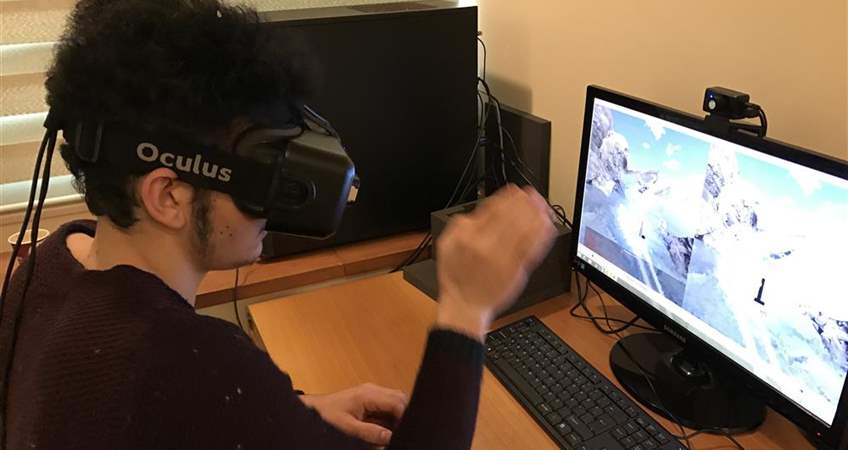
Lazy Eye (Amblyopia) and Modern Treatment with VR

Revolutionize
Lazy Eye Treatment
End boring patching methods with fun and effective Vivid Vision VR (Virtual Reality) therapy developed for children and adults.
What Exactly is Lazy Eye (Amblyopia)?
Lazy eye, medically known as amblyopia, is a condition that usually appears in childhood, where one eye sees less well than the other. This condition, which can lead to permanent vision loss if not diagnosed early, is actually caused by the brain not processing signals from one eye adequately. Although there is no structural defect in the eye itself, the neural connections between the brain and the eye weaken.
The brain begins to prefer the eye that receives clearer images, and over time, it ignores the signals coming from the eye referred to as "lazy". If this condition is not treated, it can cause permanent weakening of the vision in the affected eye and, in particular, the loss of depth perception. That's why lazy eye treatment is of critical importance.
Classic Methods vs. Vivid Vision
Visually examine the key differences between the two main approaches used in lazy eye treatment.
Why are Classic Treatments Insufficient?
Traditional patching therapy forces the brain to use the lazy eye, but it has some fundamental shortcomings. It is boring for children, which reduces compliance with treatment. Most importantly, it is often inadequate in improving the ability of the two eyes to work together (binocularly) and 3D vision. Vivid Vision is designed to solve this problem precisely.
Things You Should Know About Lazy Eye Treatment
Causes and Symptoms of Lazy Eye
The most common underlying causes of lazy eye are:
- Strabismus (Crossed Eyes): Not having the eyes aligned causes the brain to suppress the image from the deviated eye. This is the most common cause of lazy eye.
- Refractive Errors (Vision Defects): A significant difference in the prescription between two eyes (anisometropia), refractive errors such as myopia, hypermetropia, or astigmatism can cause the brain to ignore the eye that sees more blurredly.
- Conditions That Block the Image: Any condition that prevents a clear image from being obtained from one eye, such as congenital cataracts or drooping eyelids (ptosis), can lead to laziness.
Children often cannot express that one of their eyes sees poorly. For this reason, it is critical that parents be attentive to the following symptoms:
- Frequently closing or squinting one eye
- Frequently tilting the head to one side
- Looking at objects very closely
- Difficulty with depth perception (inability to judge the distance of objects)
- Visible drifting or crossing of the eyes
How Does VR Treatment for Lazy Eye Work?
Vivid Vision turns treatment from a boring task into an exciting game. Its basic principle is to enable the brain to use both eyes simultaneously and as a team. Through VR glasses, the contrast of the image shown to the stronger eye is reduced, while a more distinct image is given to the lazy eye. The brain, wanting to succeed in the game, has to combine the information from both eyes. This prevents the brain from suppressing the "lazy" eye and teaches the two eyes to work as a team (binocular vision). This method transforms a passive patching process into a dynamic process in which the brain actively participates, restructuring neuronal connections.
Is Lazy Eye Treatment Possible in Adults?
In the past, it was thought that lazy eye treatment was only possible in childhood. However, thanks to modern technologies such as Vivid Vision that are based on brain flexibility (neuroplasticity), it is now possible to achieve vision improvement and restore 3D vision with lazy eye treatment in adults. Of course, although the success rate varies depending on the person's age and the degree of laziness, there is now an effective ray of hope for adults as well.
Advantages of Vivid Vision Therapy
Fun and Motivating
Children and adults are more willing to participate in treatment by playing games instead of boring exercises.
Faster Results
Intensive therapy that makes both eyes work at the same time can provide noticeable improvements in a shorter time.
Effective for Adults Too
By using brain flexibility, it is effective even in adults where the chance of treatment is considered low.
Clinical and Home Application
Treatment can be carried out flexibly with clinical sessions under expert supervision and home programs.
Frequently Asked Questions
Medical Information & Disclaimer
The content on this page is for informational purposes only. The information contained herein should not be used as a substitute for professional medical advice, diagnosis, or treatment by an ophthalmologist. Always seek the advice of a physician or other qualified health provider with any questions you may have regarding a medical condition.