
 Türkçe (TR)

LASIK Treatment Technique
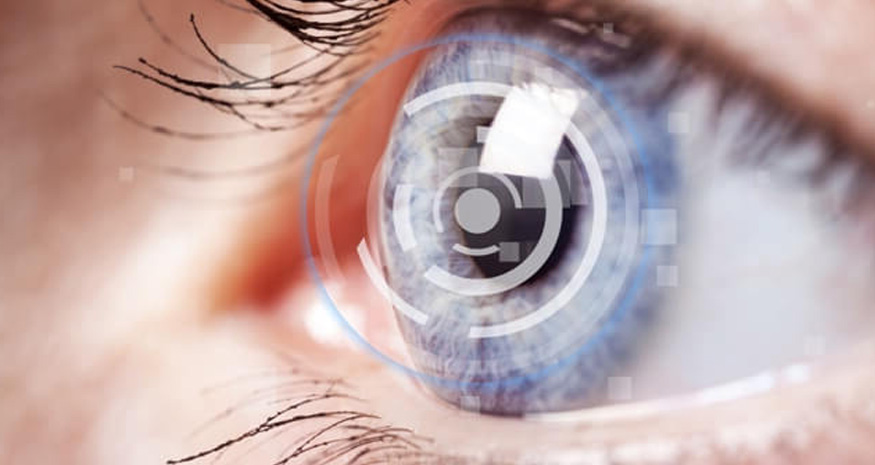
Operations known as eye drawing or laser eye treatment among the public are performed with laser, but the eye is not drawn; the cornea, which is the transparent front layer of our eye, is reshaped by evaporation, which we call ablation.
LASIK is the most preferred, most reliable, and most widely used technique of excimer laser methods all over the world and in our country.
The idea that it is possible to surgically correct refractive errors by changing the anterior curvature diameter of the cornea was put forward in 1949 by Colombian ophthalmologist Jose Barraquer. For this purpose, Barraquer first cut leafy discs from the cornea freehand, and in the 1960s, he designed the device called microkeratome, which could perform this process more precisely and whose basic design has not changed in modern equivalents. Barraquer shaped the leafy discs – flaps – he cut from the cornea by shaving them and named this technique keratomileusis.
Dr. Luis Ruiz (Colombia) developed the motorized keratome instead of cutting by hand.
After the use of Excimer lasers in the eye in 1983, Dr. Ioannis Pallikaris (Greece) developed the LASIK technique with keratome and excimer laser in 1988.
In Turkey, eye surgeries with the LASIK technique were first started by Op. Dr. Sinan Göker in 1992. In addition to being a painless procedure, the advantages are that functional vision starts immediately the next day after the application, the short recovery time, and the successful results.
LASIK method; It is applied by preparing a flap in the cornea layer with a microkeratome or with a femtosecond laser. Wavefront-LASIK (A-CAT): In addition to the refractive error of the eye, microscopic defects are revealed with the aberrometry device. In the Wavefront technique, the eye grade is corrected together with these defects. Thus, night vision and vision quality are better. Your doctor will decide which method is suitable for you after examination and measurements.
Topography Assisted LASIK (T-CAT): The cornea surface usually has a spherical appearance. However, some eyes may have irregularity or asymmetric astigmatism in the cornea. This is seen in topography (cornea maps) measurements and accordingly, Assisted LASIK is planned.
What are the suitability criteria for LASIK?
When the patient applies to our clinic, they undergo a detailed and long eye examination. In the first stage, eye values are measured by computer and topographic maps providing detailed information about the front and back of the cornea are created. Pupil size is measured (Pupillometry). Eye grades with and without drops are checked twice by our doctors. Corneal thickness is determined with an ultrasonic device (Pachymetry). Intraocular pressure (eye pressure) is measured. Retina (back of the eye) scanning is performed.
As a result of all these examinations and measurements lasting nearly 3 hours, your doctor decides whether you are a suitable Lasik candidate or which method will give you better results.
LASIK OPERATION:
1- After our patient lies down on the laser table, the eye is anesthetized with drops.
2-A thin membrane-like layer (Flap) is lifted on the cornea: Corneal flap is prepared with Moria M2 Microkeratome Femtosecond Laser with Microkeratome (blade) or Femtosecond Laser (FemtoLASIK).
3- After the flap is lifted, ablation is performed on the cornea with an excimer laser and the refractive error is corrected.
4- The corneal membrane is placed back.
You will be given a sedative about 30 minutes before the surgery. This eliminates the excitement of the surgery and increases compliance. Immediately before entering the laser room, anesthetic drops are dripped into your eyes, so you will not feel any pain or discomfort. Before lying down on the laser table, your eyelids are wiped with an antiseptic solution. A special wire is attached to separate your eyelids before starting the procedure (retractor). In this way, you cannot close your eyes even if you want to. What you will see later is the bright light of the microscope and the target light in the middle. Your doctor will ask you not to take your eyes off this light during the surgery. Since the laser is locked on the eye during treatment, the laser follows the eye even if the patient moves their eye. Being comfortable and not tensing yourself will significantly shorten the surgery time. The treatment time is 4-5 minutes for each eye. However, this period is slightly longer in the FEMTOLASIK technique because 2 different devices are used. After the procedure is completed, the patient is sent home wearing protective glasses. The glasses should not be removed until the next morning when you come for a check-up.
Before the operation;
- If you are using soft lenses, stop 1 week before. Glasses can be used during this period.
- If you are using hard lenses or gas permeable semi-soft lenses, these lenses must be removed 3 weeks before the operation.
Operation Day;
- Not using perfume, deodorant, cream and not wearing makeup,
- Not being hungry,
- It is necessary to come with a companion.
After the surgery, antibiotic drops are used in your eye and protective glasses are worn to prevent dust or foreign matter from entering the road. These glasses are removed by us during the examination the next morning. Blurred vision is completely normal. You may experience burning, stinging and watering in your eyes for a few hours. Pain is rare, but if it occurs, it will go away with a simple pain reliever. You should not touch, scratch or rub your eyes. Do not take a bath or wash your face on the evening you had the operation. Watching television, reading books and dealing with the phone up close are not recommended. Use your antibiotic drops as directed by your doctor.
After the operation:
The day after the treatment, our patients return to their normal lives with a short check-up at our clinic, but this check-up is extremely important.
Things to consider;
It is recommended not to wear eye makeup for 1 week.
Swimming pool, sea, sauna, Turkish bath and solarium are prohibited for 1 month.
Do not scratch or rub your eyes for 1 month.
Team sports such as basketball, football, tennis, boxing should be avoided for 1 month.
However, walking, running, and exercising with equipment can be done 1 day later.
After the operation, we call our patients for a free check-up on the 1st day and 1st month.
However, our patients living outside the city or in other countries can also have their check-ups done by doctors in their city.
WHO CAN HAVE LASIK?
- 18 years and older
- Those whose glasses grades have not changed more than 0.50 degrees for at least 1 year
- Eye defects with up to 10 degrees of myopia, up to 7 degrees of hyperopia and astigmatism,
- Those whose corneal thickness, corneal surface and eye structure are suitable for Lasik treatment
WHO CANNOT HAVE LASIK?
- Those with thin corneas: Alternative methods are recommended. See PRK, PHAKIC Intraocular Lens
- Those with Keratoconus in the cornea: There are different treatment methods for Keratoconus. See Keratoconus
- Those with cataracts
- Eye findings related to Diabetes (Diabetes)
- Pregnant and breastfeeding women
- Those with Rheumatic Disease: Collagen tissue diseases such as Rheumatoid Arthritis, Ankylosing Spondylitis, Scleroderma.
In some cases detected during the examination, these problems are treated first, and then LASIK surgery is planned. These are: Glaucoma-Eye Pressure: After the preliminary examinations of patients with high intraocular pressure, the intraocular pressure is regulated with treatment. Laser treatment is performed after the eye pressure is brought under control.
Retina-If there are tears, holes or thin areas in the nerve network layer at the back of the eye, these are first secured with Argon Laser, and LASIK is applied 3 weeks after this procedure.
Medical Information & Disclaimer
The content on this page is for informational purposes only. The information contained herein should not be used as a substitute for professional medical advice, diagnosis, or treatment by an ophthalmologist. Always seek the advice of a physician or other qualified health provider with any questions you may have regarding a medical condition.