
 Türkçe (TR)

Laser Eye Surgery and Treatment: A Guide to Freedom from Glasses
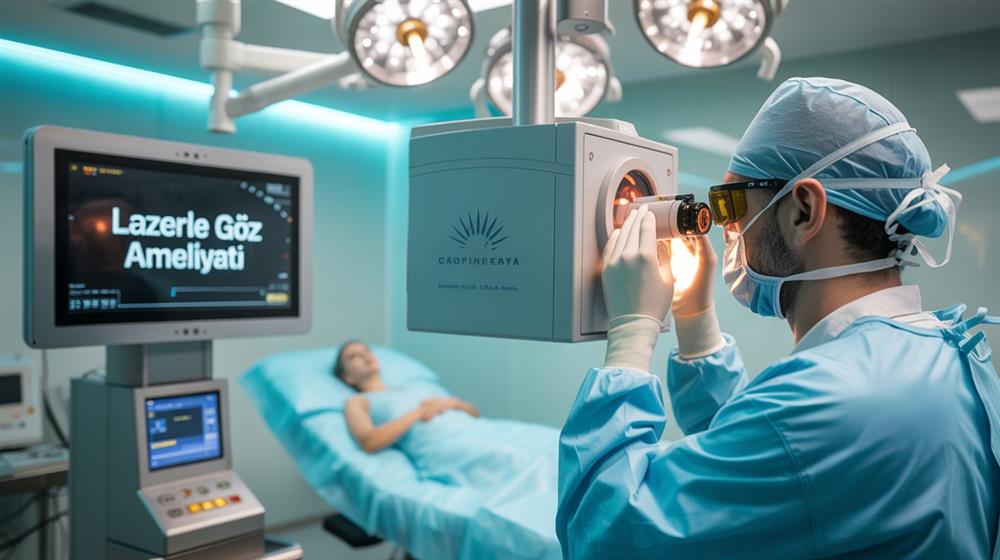
Today's technology offers miraculous solutions to millions of people who want to eliminate the use of glasses and contact lenses from their lives. Laser eye surgery is one of the most effective and popular methods used to correct vision problems such as myopia, hyperopia, and astigmatism, also known as refractive errors. Thanks to these modern laser eye treatment methods, patients can achieve clear vision with an operation completed in minutes. We have compiled everything you need to know about laser eye surgery in this article, in light of the expertise and experience of Dr. Sinan Göker, who performed the first laser treatment in Turkey in 1992.
What is Laser Eye Treatment and When is it Applied?
Laser eye treatment is a procedure that aims to permanently change the shape of the transparent layer at the front of the eye, the cornea, which refracts light and focuses it on the retina. By reshaping the cornea using Excimer Laser technology, light is focused correctly, thus eliminating the vision defect.
This treatment is primarily used to correct three main eye defects:
- Myopia (Nearsightedness): The problem of not being able to see distant objects clearly. Laser treatment flattens the center of the cornea, allowing light to focus further back, onto the retina.
- Hyperopia (Farsightedness): The condition of not being able to see near objects clearly. Laser treatment gives the cornea a steeper form, aiming to focus light on the correct point on the retina.
- Astigmatism: A condition that causes blurred and shadowed vision at both near and far distances due to the irregular shape of the cornea or lens of the eye. Laser treatment eliminates these irregularities in the cornea, resulting in clear vision.
Are You a Suitable Candidate for Laser Eye Surgery?
Laser eye surgery may not be suitable for every patient. A detailed eye examination by a doctor is critical for the success and safety of the treatment. According to the criteria applied at Dr. Sinan Göker's clinic, the main characteristics sought in suitable candidates for laser treatment are:
- Age: The patient must be 18 years of age or older. The ages of 20-21, when the eye number has stopped progressing, are generally considered ideal.
- Stability of Eye Number: The eye number should not have changed by more than 0.50 diopters in the last year.
- Corneal Thickness: The corneal thickness must be sufficient for the correction to be made with a laser. This is determined by measurements.
- General Eye Health: There should be no other eye diseases such as eye pressure (glaucoma), cataracts, or keratoconus.
- Systemic Diseases: Conditions such as uncontrolled diabetes or rheumatic diseases may prevent laser treatment.
- Pregnancy and Breastfeeding: Laser treatment is not performed during pregnancy and breastfeeding periods because hormonal changes can affect the eye number.
Modern Laser Eye Treatment Methods
With the advancement of technology, it has become possible to choose the most appropriate treatment for the patient's eye structure and needs. Here are the main laser eye surgery techniques:
1. LASIK and iLASIK (Femtosecond Laser) Method
LASIK is the most widely applied laser eye treatment method in the world. In this technique, a thin flap is created from the upper surface of the cornea. In traditional LASIK, this flap is created with a special blade called a microkeratome, while in today's modern technology, the iLASIK (Femtosecond Laser) method, this process is performed entirely with a laser without using a blade.
- Process: A precise flap is created in the cornea with a Femtosecond Laser. After the flap is gently lifted, the necessary correction is applied to the underlying corneal tissue with an Excimer Laser. After the procedure, the flap is closed back into place and fuses on its own.
- Advantages: It is a painless method. Recovery is very fast, and patients can usually return to their social lives with clear vision the next day. Both eyes can be operated on at the same time.
2. PRK / TransPRK (No-Touch) Method
It is an ideal alternative for people whose corneal structure is not thick enough for LASIK or who are in different professional groups (soldiers, police officers, athletes, etc.).
- Process: In the PRK method, the epithelial tissue, which forms the top layer of the cornea, is scraped off mechanically or with the help of alcohol, and then the Excimer Laser is applied. In the TransPRK (No-Touch) technique, this epithelial tissue is also removed with a laser, without any device contact with the eye. For this reason, it is referred to as "No-Touch".
- Advantages: Can be applied to patients with thin corneas. Since no flap is created, there is no risk of flap-related complications.
- Recovery Process: Recovery takes a little longer than LASIK. Complaints such as stinging, burning, and watering may occur for the first few days. It may take a few weeks to achieve clear vision.
3. SMILE (Small Incision Lenticule Extraction) Method
It is one of the newest laser technologies. It is used in the treatment of myopia and astigmatism.
- Process: In this method, a small piece of tissue called a lenticule is created inside the cornea using a Femtosecond Laser. Then, this lenticule is removed through a minimal incision of approximately 2 mm opened on the corneal surface.
- Advantages: No flap is created, corneal biomechanics are better preserved. The risk of dry eye is lower than with LASIK. Thanks to the minimal incision, recovery is comfortable.
Surgery Process: Before and After
The process that awaits you when you decide to have laser eye surgery is generally as follows:
- Detailed Examination: The first step is a comprehensive examination to determine whether you are suitable for laser treatment. At this stage, many tests are performed, such as corneal topography, pachymetry (thickness measurement), and determination of eye number.
- Surgery Day: The surgery is performed with anesthetic drops, and the patient does not feel any pain. The operation time for each eye is only a few minutes. The patient is awake during the operation and follows the doctor's instructions.
- Post-Surgery: After the operation is completed, the patient is rested for a while and then discharged. A control examination is performed the next day after LASIK and a few days after PRK. It is very important for the recovery process to use the drops given by the doctor regularly and to follow the rules such as not rubbing the eyes in the early stages and not allowing them to come into contact with water.
Conclusion: Say Hello to a Life Without Glasses
Laser eye treatment is an extremely safe and effective method when applied with modern technology by an experienced surgeon and with the correct patient selection. By permanently correcting refractive errors such as myopia, hyperopia, and astigmatism, it offers the person the comfort of living without dependence on glasses and lenses.
If you also want to get rid of your glasses and start life anew with clear vision, you can find out whether you are a suitable candidate for laser eye surgery with a detailed examination to be performed by a leading physician in the field such as Dr. Sinan Göker, and you can decide on the most accurate treatment method for you.
Medical Information & Disclaimer
The content on this page is for informational purposes only. The information contained herein should not be used as a substitute for professional medical advice, diagnosis, or treatment by an ophthalmologist. Always seek the advice of a physician or other qualified health provider with any questions you may have regarding a medical condition.